
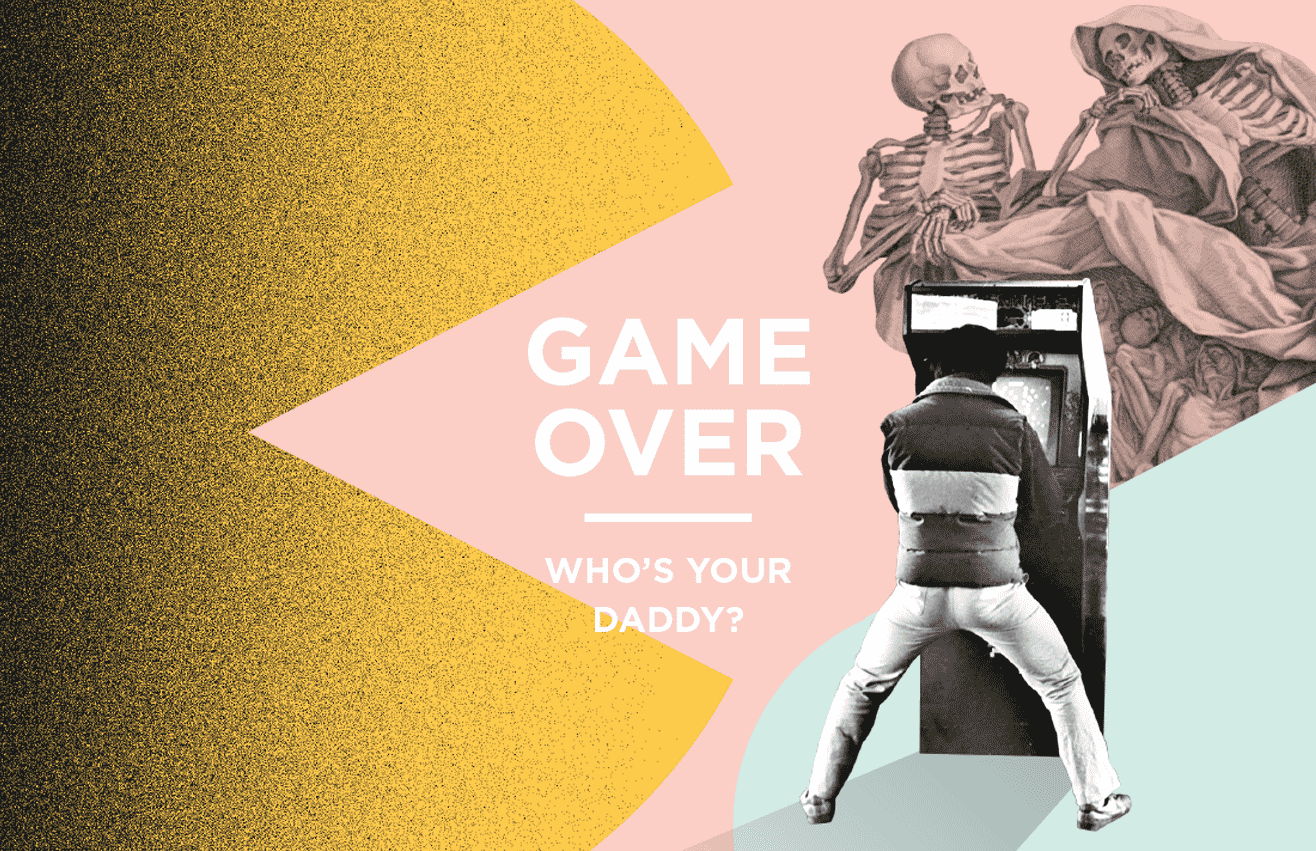
This week I asked Jai the leading question; what rules would he give his kids when one day he has his own family. His first and rather opportunistically hopeful answer was, “I would let them have an Xbox”. It reminded me that whilst I am in constant deliberation whether I’ve thrown the baby out with the bathwater when it comes to games, my son grows up with a set of skills that would have otherwise been swallowed by that big ‘ol thief of time.
Like any new thing that hits the planet, the rapid rise in popularity of e-sports – professional gaming where hundreds of thousands of people cram into stadiums to watch their favourite multi-million dollar celebrity gamer kick-ass – is not without its underbelly, until regulation is tightened and the medical profession run out of practitioners to pick up the fallen and suddenly something has to be done about it.
The streets are empty because e-sports is the new addiction, with six-year olds refusing to go to school and shoved into therapy for their rebellion, nine-year olds sport illegal gamer tattoos they had to get done in some dodgy basement, and some even wear nappies to thwart interruptions on their way to Valhalla, while others so severely neglect their sleep and nutrition, that they land themselves in hospital. Then there are of course the suicides of gamers shooting their mothers and then themselves which get buried in the evening news. Excessive video gaming degenerates the frontal lobe, generally making gamers antisocial, impulsive and unhappy, which is why more and more kids are shockingly put into electric shock therapy, to kick-start that damaged area of the brain that makes humans, human.
In 2011 the South Korean government acknowledged they had such a big problem with young people addicted to gaming, that they introduced the ‘Cinderella Law’, which forbids anyone under the age of sixteen from playing between midnight and 6am, a law that has since been vigorously and contemptuously campaigned against by the e-sports Illuminati.
From temple to stadium it’s somewhat disheartening to see the Empire of Rome alive and well with its circuses where people are still thrown to the lions, but what is ultimately disturbing about violent gaming in particular, is the reminder that vicarious murder is still the pleasured pastime of our times.
Vicarious murder. Why are there large swathes of the human race compelled to kill for pleasure? Perhaps the better question is ‘who’ are they trying to kill?
The Russian novelist Fyodor Dostoevsky alerted us to man’s inclination for pleasurable killing in his novel ‘The Brothers Karamazov’ which unfolds like an Agatha Christie whodunnit as the court tries to find the murderer of father Karamazov. Although one of the brothers is arrested because of a trumped up charge he vehemently protested, the case is never solved, perhaps so Dostoevsky can draw his parallels between the patricide and heavenly homicide – society’s killing of God – as if to deliberately rebuff one of his contemporaries, Friedrich Nietzsche, who popularised the claim that “God is dead, and God remains dead, and we have killed him”, the full quote teeters.
As universal themes go Dostoevsky’s subtextual questions are still important for us God-haunted creatures today; how DO we measure human life without God as our compass? If God is dead then what is permitted? “Everybody wants to kill their father” is Ivan Karamazov’s so-called ‘discovered truth’, “Is that not why you came?” as he addresses the court as if addressing the world, and certainly the Bible concurs with this subversive sentiment when it states that the carnal mind’s default position is enmity with God our Father, (Romans 8:7). Isn’t that enough to make us suspicious, or are we happy to go along with the marauding mass? And so modern life can be characterised by a life that perpetually aims, in some form or another to kill God, and in so doing a new troubling kind of freedom comes into view, which ultimately plunges us into a crisis of authority. Who is our authority, who are we listening to? And with the crisis of authority comes the crisis of identity, which is one of the primary reasons why people today are left, amongst all the other other ills, confused about their gender.
In short, without a benevolent authority means were at risk of adopting a malevolent identity, and such an identity invariably leads to… what?
I could expound the ‘Greiner curve growth model’ for business and how the last growth crisis point, after all the alliances are made, is the crisis of ‘identity’, but let’s for the moment stick with novels and in this instance go to ‘Prometheus Unbound’ from Greek antiquity. A tragedy based on the myth of the titan Prometheus, champion of humanism who gave the human race some of the creative arts with the promise that it would lead them to the divine, even though he was really rallying the race to defy the ‘tyrant’ God Zeus, who incidentally overthrew his father Cronus, who in turn overthrew his father Ouranos in the already pervasive father-killing pattern. Even though there are many such cautionary tales in circulation for those God-killers in each passing generation who still put faith in their creatively scientific endeavours in search of ‘longevity’, ‘leaving something behind’, by way of a definition for the ‘divine’, coughing up their spiritual cancer they altogether not only fail in the belief in God’s existence, but why He should matter.
And there’s the question; why should He matter?
For a start, all this killing is ultimately unsatisfying, which partially accounts for the gamer suicides. The Nazi Judge Otto Thorbeck sentenced Lutheran pastor Dietrich Bonhoeffer to death even though both had the same classical education, they both read the same books and so education itself won’t ever cure us as long as we live in Thorbeck’s moral relativist culture as opposed to Bonhoeffer’s God-culture of absolute rights and wrongs. For atheists and their insistence on a closed universe determined purely by its observables remains a circular philosophy, a holding pattern deeply unsatisfying because it relies on unreliable faculties to reason.
The greatest literary work in the Italian language, the ‘Divine Comedy’ is one attempt to lead us to the end of rationality and reason over the edge into what Dante calls ‘divine love’, and that’s the rub; without the right authority we lose our right identity, and if we lose that, then we lose divine love, which needless to say is far deeper than shallow love, what St. Augustine summarised as ‘love for the immutable’ because it can never be lost in contrast to ‘love for the mutable’ which circumstances easily drive away. If we lose divine love then we lose the only thing that leads us to eternal life, don’t you see? “A future awaits those who seek peace” (Psalm 37:37), a future of infinite amounts of increasing love and joy. We will be resurrected, we will NOT go to nothing, we will NOT be just a floating consciousness or become part of an impersonal cosmic force. Love for our Father is our opal card, our platform nine and three quarters, our golden ticket, compass and pass into all eternity, and if our first love isn’t directed towards Him, we are quite simply unable to travel into the future, and so what remains inescapable is this; when we kill God, we end up killing ourselves.
Game over.
This week Noa sat opposite me at the dinner table and asked me if she could give me some feedback. I said yes and then she proceeded to tell me that I put too much pressure on her to perform at school, so much so that she feels, “my identity in Christ is threatened. I’m staring to think my value is only in my marks.” My face fell and my heart sank while I told her that all parents want for their children is to do better than they did at school. But whilst I sat there somewhat despondent, pledging to ease off the gas, I suddenly realised how father-killing and subsequent suicide is born – from imperfect fathers who teach their children, at times unwittingly, to either love the wrong things, or to love the good things far more than their Maker, which is why I then reminded this beautiful and loving young woman, that threats to our identity does not absolve us from our own responsibility, but should drive us to dig even deeper, and nuzzle into the most perfect Father, to guide our ways.
 thankyoubackbone.com