
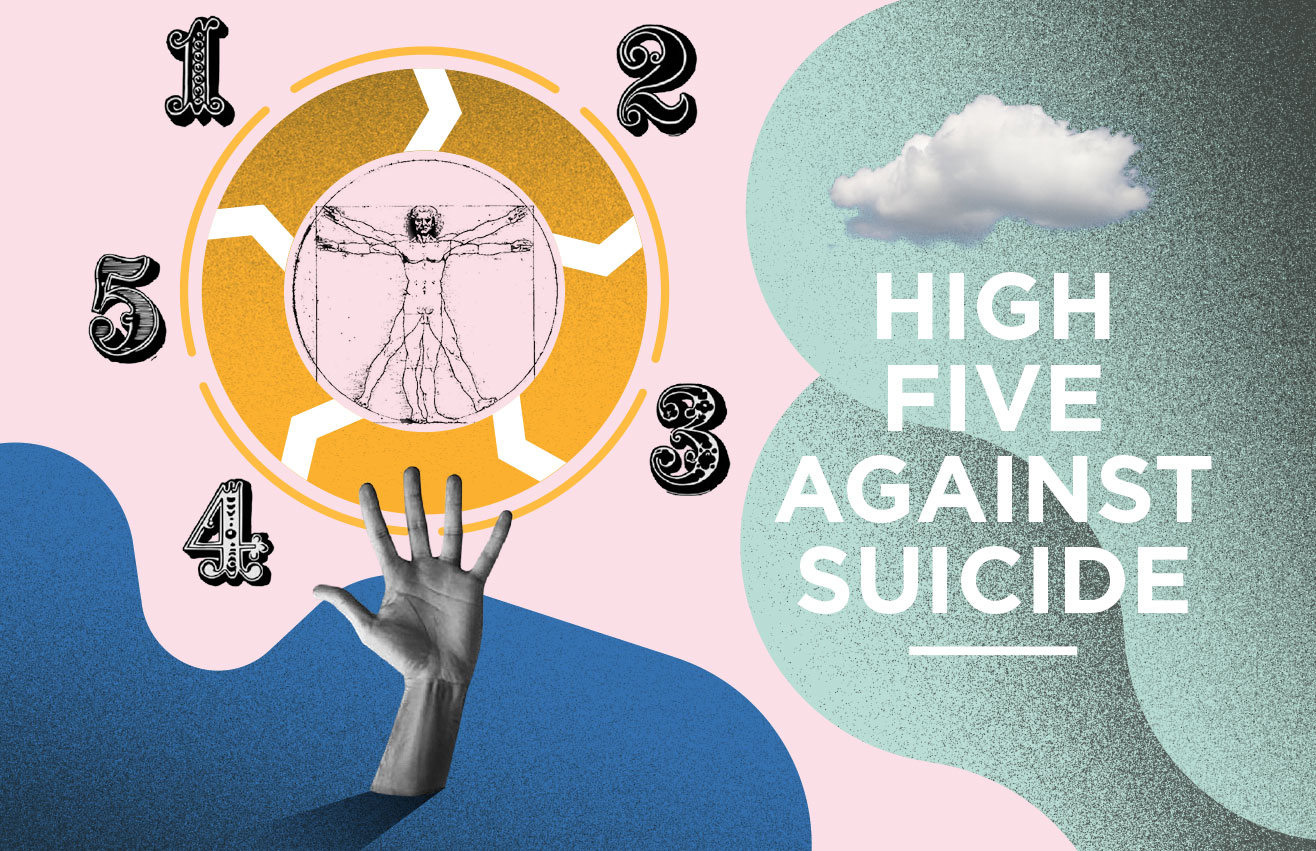
‘5 Australian entertainment industry workers attempt suicide every week.’It’s been a year since I was confronted by that statistic whilst doing some work for an organization affiliated with my employer, committed to addressing this problem, called ‘Entertainment Assist’. Twelve months on that statistic is still as shocking to me as it was then, because these are the people I work alongside.
Having read the rather lengthy report conducted by the university of Victoria, some of the pustules which plague this industry more than any other in Australia, are the stresses on families caused by the inconsistent nature of the entertainment work, the largely unchecked harassment, bullying and sexual abuses which occur, (see Weinstein), and as a consequence the severely high instances of drug and alcohol abuse, giving rise to depression being five times higher and suicide double the national average.
In addition to the report, I have my own psychological questions around how much an individual’s own identity takes a battering, eroded with the frequency of alternate identities worn in and out of roles, for which the art form might have to answer for. As if to confirm this belief I recently heard a famous Australian actor say in an interview; “…afterwards, I go home to try and figure out who I am.”
For me personally this statistic was the catalyst to what has become an important question, haunting me for the best part of this year, providing me with answers I periodically chiselled into stone, until the year lost its freshness and the question fell in the trenches as I slid back into my niche, shouldering with the worker bees in their sullen murmur, my crooked visitor burrowing itself beneath distractions, slinking behind webs and clinging vines, all trace almost vanishing, until another suicide, this one too close to home, with its cruel cardiac paddles, gasped the question back to life.
In Italo Calvino’s book ‘Invisible Cities’, Marco Polo describes fifty-five fictitious cities to the emperor Kublai Khan. In one of them, Adelma, the city of the dead, Marco at first recognizes all the dead acquaintances from his past as walking, talking, breathing inhabitants of this city, but soon realizes that his mind was printing the faces of the dead onto the Living, and proceeds to offer a commentary on how the dead are always with us, how much we are haunted and afflicted by ‘the passed’ we carry inside. “Those who are dead, are not dead, but just living inside my head”, as the Coldplay song 42 goes. But there comes a point where the mind refuses any more dead faces, so we, like Polo, begin to project and find resemblances in others as a way of bringing the deceased back to life, not only observing the body’s own wired way to want to live, but also its desire for wanting others to continue on.
I can only speak for myself but it is enough that I have to walk among the living dead to also have to endure the weight of being a living cemetery, and so, with eyes raised and firmly fixed on that other invisible city, one of life, the magnificent new Jerusalem, I am compelled with even more insurgency to push forward this question to assist my kind, for I have had enough of botanizing on the asphalt, with weeping on the wallow, I am done being yellow, gaunt and sallow with suicide.
This.
Is.
The.
Question.
What makes a person whole?
What are the essential things a human being needs to be happy and fruitful in this life? What makes him complete and what makes her perfect? What is life’s terminus? What could prevent his suicide? What makes her whole?
There are five answers.
Five things a human needs to live a rich fulfilling life, which I write here, not as an essay, but as a work in progress, an honest honing and tactical simplification into a practical model, and therefore I invite you to journey with me. I’ll accept any additions and subtractions, so feel free to share with the other thinkers in your communities. All I ask is that contributions be thoughtfully considered and respectfully put forward.
When I first began kneading this question, and because I am a visual person, I constructed it’s five answers into a model in three sizes; small medium and large. I began with the medium, imagining this model in the context of a commune, with the five answers as five buildings facing inward to make a pentagonal, as if it were the beginnings of a small community or Village, which quickly proved idyllically self-sustaining. I then made the model smaller to see if Jenni and I provided those five things in our home, where everything begins, to ensure we’re crafting the best possible futures for our children. Some adjustments were conferenced. I then made it larger, stretching it over my beloved city, Sydney, and found that although there are a large number of organizations which accommodated one or more of those needs, there were very few that addressed all five.
A helpful question to ask is to imagine, once you invited a homeless person into your home, what you would offer that individual to help him or her towards a better, more complete and wholesome journey. If you only provided food and shelter for a time, that soul would be utterly dependent on you. The point I want to stress is I am convinced that to be successful in completing, and making a healthy human being, all five needs must be addressed with the systematic efficiency of a military objective. Only addressing one isn’t good enough because it creates a descending and diminishing spiral towards oblivion, but if all five needs are met, then the model becomes an ascending, broadening spiral of growth, with entirely new worlds to be discovered. It is not necessary for one organization to address all five needs themselves, but it is essential they provide the connections, collaborating with other organizations, and the encouragement necessary for individuals to accomplish all five.
Big call I know.
But the stakes are high.
.
So here we go.
‘High five against suicide’, though inexhaustible, we must begin with the simplest seed.
ONE – REST
Rest is Sleep. Most I suspect take sleep for granted, yet someone close to me is currently struggling with getting more than 3 hours a night for no apparent reason, which she inadvertently exacerbated by forming addictions in her attempts to find sleep, and together with her increasing worry, landed herself in hospital because she now has three problems instead of one. She is receiving help, and on the mend.
Rest is Reboot. Some time ago there was an article in the New Yorker where the author made a case for reviving the Jewish sabbath because New Yorkers were over worked, and as a consequence, employers weren’t getting the best performance from their employees. The author tendered the sabbath as a ‘reboot day’ equating it to rem sleep, without which, would have employees working to a low optimum, with a high risk of mental breakdown. The sabbath is of course much more valuable if one considers its traditionally a day to remind ourselves and celebrate that we are no longer slaves, but free men and women. When God exiled Israel because of their idolatry, He took away their sabbaths, for they were no longer free, the irony for New York and many other cities should not go unnoticed. Whether you are a believer or not, be kind to yourself, look after your career and mental health and insist on a reboot day. No company will bat an eyelid taking your twentyfour-seven so your hours are up to you.
Rest is Peace. The Bible teaches that if we’re going to worry, we should worry about today only, and emotional intelligentsia tells us that most of our worries will never eventuate. But telling someone to ‘be at peace’ is not as effective than when we offer it to others, and a real practical way to do so, is to extend forgiveness to others everywhere and anywhere, without having them ask. In the Aramaic translation of the Bible, ‘forgiveness’ is translated as ‘serenity’, and so do all you can to leave others as serene as you possibly can.
Rest is Hope. In the United States suicide rose 24% between 1999 and 2014. Chomping through a large chunk of data around the why, can be boiled down to one word – Hopelessness. The Bible teaches that without hope people perish, and without hope people worry unnecessarily, aggravated by every ruthless attempt to attain and experience all they possibly can in this life, not only frustrates their purpose, but also their rest. It is one of the biggest concerns I have with Atheism, because apart from the discrepancy that while believers look at the evidence ‘for’ and ‘against’ Christ, Atheism only looks at the evidence ‘against’, the error of this belief system contributes to hopelessness in a big way, and with it a variety of suicides. In many cases fast, but in most instances, slow.
TWO – FREEDOM
Freedom is Movement. If we were to attend a school of life which only taught six important subjects towards your qualification, the subject of freedom would have to be one. Freedom is one of the largest, most complex topics to be thorough on, and even the most knowledgeable admit that they are trying to pin down a living organism, a faceted circus beast which may be glimpsed for the price of an expensive admission ticket, only for it to change as it moves. Freedom affects more aspects of our society and thinking patterns than we care to avow, and I am reticent to even attempt disassembling a loaded gun, if it weren’t for the reminder that the world improves with courage, and so, here are just a few points to ponder:
No one is truly free. Even those who profess they are, are slaves to their own independence – ‘I’ the impregnable citadel of ego. To ‘love’, by way of example, means you restrict your freedoms, therefore, there is not just one type of freedom but numerous types, which means you have to decide which freedoms are important to you. If you are an athlete, you are not free to eat what you like but have some restrictive regimen so you can enjoy the freedoms the sport provides. Just as much as a fish is free within the boundaries of an ocean, it is not when gasping on the deck of a boat. When you live in a community and a family, you partly belong to the members of that community and it is crucial to contemplate whether they would give you their permission for you to take the risks with your life that you do. I wonder how many fifteen-year olds, and indeed adults know that their every word and action is held to their community’s account? Then there are the differences between ‘freedoms for’, and ‘freedoms of’ that require rigorous discussion. We live in an age of the latter, where personal freedoms are more and more encouraged, and with it more marriages break apart, social and church communities fragment which invariably necessitates a more bureaucratic state, so that more freedom ironically leads to less freedoms. Freedom is movement, therefore being on the journey of responsibly acquiring as much knowledge and application on freedom as possible, ironically forms part of the destination, which should include scripture, for successfully dissecting one of the purest forms of freedom that exist.
Freedom is Deliverance. I recently reread an account of a World War 2 veteran Captain Rupert Lonsdale, who near the end of his life wrote that there was not enough information on the Holy Spirit in the world. Seventy years later as a young man I recall having said something similar, but in the last fifteen years have seen more spoken and written on the Holy Spirit, than any other decade I can remember. Only by acknowledging God’s Spirit in the world, do we begin see His activities, but we also become acutely aware that there is an entire Spirit realm spliced in with ours, something that’s more tangible outside western culture, and with the benevolent, there also comes the malevolent.
From some first-hand personal accounts I can confirm that demons, Satan’s sidekicks, are the minotaurian slayers inside the labyrinth, and would confidently add, that there remains a lack of Deliverance ministries in this world, which constitutes both the ability of recognizing demons inside of others – one of the gifts of the Holy Spirit – and exorcising, expelling those spiteful Spirits. There are a number of reasons why this type of deliverance is not prevalent, primarily because principle powers are foolishly fictionalized by the western world in its comforts, cloaking demons as toothaches for the commercial gain of a host of new professions primed in self-authorizing in a self-actualized secular context, thereby losing the ability to discern between what is ‘sign’ and what is the ‘symptom’, manifested in their manifold addictions, which include narcotics, perverted sexual practices and idolatry, and therefore missing their insidious ambition to hollow out their hosts, who become increasingly unable to recognize and access the elixir of their deliverance, through repentance, and the pardoning of their sins, which is no small thing.
Freedom is the Right Identity. In Kate Chopin’s 1899 landmark feminist novel called ‘The Awakening’, the character Edna Pontellier breaks away from her orthodox social structures by ending her marriage to chase after her independence through a career in music, pursuing a man she views as the primary object of her love, and taking a separate lover to satiate her sexual prowess. Dragged along by impulse and feeling, Edna moves from thing one to thing two, and finding there is no thing three, commits suicide. The end. It’s been thirty days since Australia voted in favour of legalizing same sex marriage. Personally the vote hasn’t been troubling to me, as much as the underlying identity crisis suffered by large portions of the population on both sides of the debate. To be honest, the search for identity is alarming, because the law, and indeed Christianity, have become ‘straw men’ to a deep dissatisfaction that will never be met without Jesus Christ. The search for identity sees many moving from thing one to thing two, but with no thing three, suicide is once again the inexorable surrogate. What is an implosive identity? Any identity that sets itself up as ‘us’ and ‘them’, and Christianity is doubtlessly the purest equalizer, while its practitioners remains the ones flawed.
THREE – FOOD
Feed your Body. Our son finds himself a little sick today because Jen and I haven’t been paying close attention to his bad eating habits during the day. I mention this because diamonds are easy to miss when kicking around glass. “Eat or die”, is the message from Hemingway’s classic ‘The old man and the sea’, but I would extend that to “Eat well and live”. Strive to be a responsible chef and not a methamphetamine cook in an RV in the middle of a desert in Albuquerque.
Feed your Intellect. Be a ravenous reader and a lusty learner. Evaluate any necrotic activities and cull the defunct tools we employ to chisel out our existence, so we are able to let go of the dead who stand between us and the living, quivering realities. Desire lessons and crave mentorship, which will assist you in recognizing wisdom, which ultimately leads to eternal life. The intellect includes our fickle pulsating muscle, and although the heart would disagree, as it should, the head always informs its core.
Feed your Spiritual. In the craft of storytelling, narratives follow both an outer journey and also an inner journey, which of course mimic our lives. If, for example, the narrative of our outer journey is our home eviction, because we couldn’t afford to pay the rent, due to us not being able to hold down a job, then the inner journey might reveal that we have commitment issues. But a richer journey begins when a spiritual dimension is acknowledged, which provides us the honest tools to dig deeper into the roots and reasons why we have commitment issues, perhaps because we have an identity crisis, which is why, once we’ve lamped and lampooned the cause, we are able to journey further with more success. All three journeys, outer, inner and spiritual can be zas a pilgrimage, which is most often the strategy of journeying towards a goal of grace. Feeding our spiritual, is feeding our soul’s desire for grace.
FOUR – WORK
Work is Purpose. I’ve spent my life putting people to work. Work is one of the important ways to give people value and contribution, and borrowing the above metaphor, work is very much a pilgrimage, especially when we as fellow workers or managers provide the context, or the ‘Why’ of the work. Admittedly we sometimes don’t like the answers to the why, and the context might even scare us, but in my experience there are very often ways to work meaning and altruism into your work. ‘Meaning’, whilst fine for a secular context, it is ‘true purpose’ – fulfilling a divine tailored meaning for your life – which belongs to God, and Him alone to reveal to you. ‘Time Magazine’ ran an arresting article on the Islamic State, wherein the journalist expounded on an off-hand remark from a senator he felt should be further considered, that many of the international IS recruits, desired purpose because they lacked the work, which their particular society failed to provide.
Work is Community. A renaissance or ‘rebirth’ as per French translation, is much more characterized by collaboration than isolated genius. Some time ago I was asked during my performance review to be more hands off in the day to day. Although I strive to take business advice where I can, I found myself describing an episode of the BBC show called ‘Poldark’, where the story goes a little like this: Two cousins, each own a mine. The wealthier cousin, Francis Poldark, spends his days sipping sherry in his Estately manor, pondering the depth of infidelity of his wife, occasionally hops on his horse and after trotting down to his mine, barks some ineffectual orders, only to return to his stony facades. The other cousin, and indeed the hero of the show, Ross Poldark, spends his days down in the mine sweating it out with his crew, and subsequently, because of his shared experiences, enables him to make wiser business decisions whilst cultivating a rapport with them that would make Jesus proud. I can never stress enough that work requires servant hearts, from both staff, but especially managers.
Work is Creativity. There is currently much information in the world and subsequently much to report on how to work more creatively. I am of course both a great observer and supporter of creativity, how it exposes two mindsets in the workplace; separating poverty makers from wealth creators, the latter as aspiration which leads to innovation. But most importantly, I have come to harbour the inherent belief that creativity is the stealth that makes a soul receptive to its owner, eventually leading it back to God. Now you know.
FIVE – PRAISE
Praising man.
Praise is gratitude. It is thankfulness, encouragement and kindness, in fact any activity that demonstrates how much someone else matters. Apart from our frequency, these are not qualities we lack. The only danger worth considering, is when our gratitude is deployed to stroke our own vanity, as the villainous Dorian Gray demonstrated when he decided to turn a fresh leaf and leave a young country lass unscathed from his usual destructive wiles, after which his confidant Lord Henry astutely pointed out, “that anyone can be good in the country”, returning the “cunning to Dorian’s eye and the curved wrinkle of a hypocrite”, which is why the Bible teaches to “not let your right hand know what your left is doing”, as if ‘good’ itself is tested for its authenticity when it is practiced away from pride. Praise isn’t simply just giving, but giving back, the difference is subtle but substantial. Mentors often engage in mentorship programs because they are overcome by a thankfulness which compels them to reciprocate, giving back what they’ve been so generously given over the years, during their short tenure on this planet.
Praise is reproof. As hard as it is, correction too is a way of demonstrating how highly someone is appraised. The father who loves his son corrects him, as so many proverbs go. But we also need to be open to praise, to be teachable and available for advice, so that we may allow ourselves to be receptive to wisdom when it should visit. Yesterday I again ran into an older gentleman who lives around the corner from me. He remarked that we’ve knocked into each other more in the last week than all the previous months we’ve known each other. I replied that there must be a reason and proceeded to ask him if he had some general advice for me. Chuckling he asked me why. I told him I was always on the lookout for Wisdom, after which he graciously acquiesced.
Praising God.
Praise is singing. Because of the grief that currently lingers in our household, I have agonize over what to say, when to say it, to give words of life that didn’t sound like a varnished cliché, or a cloying veneer, and after getting up from my knees felt these words, not my own, lift off my tongue for my children, words that encouraged them to find themselves a song, one song, a hymn or a gospel track to own, to memorize, and to carry with them through life, to sing in their quiet moments when they are too paralyzed to pray and too numb for noise, and bursting into the light as I said it, I myself have done since I was a child. (Psalm 23). Praising God is hardest when it’s hard, which is why a personal song can murmur between sprints, keeping our emotive bond of intimacy quivering, as we continue to lay our all at His feet.
Praise is courageous. If I may consider something controversial in this late hour, to propose that this activity of looking for ways to chisel thankful words for the Creator of the galaxies and the Maker of you and me, is no longer the prerogative of the believer, but also the unbeliever, which requires a little faith, and a lot of courage, two qualities already practiced by every member of the populace to some degree. I’d like to further advance that anyone who does this, will not lose anything, no credibility, no loss of face or reputation, no loss of conscience, but instead gain infinitely more than any yoga class, wellbeing retreat or religious ritual can ever offer.
“Love is all you need.”
All very well mister Beatle, but what is love exactly? Unless its molecular structure can be unthreaded and pulled apart, love is constantly assumed, misaligned, misconstrued, misread and remains unseen, unless we chip away the marble around its true meaning, in these five practical definitions; of rest, freedom, food, work and praise, in that order, so that their purpose may be expounded by someone greater than ourselves.
The seed.
Tracing the life, times and teachings of the world’s first Jedi, the warrior monk Jesus Christ who deployed this exact five point strategy when He invited all to; “enter His rest” (Matthew 11:28), when He fed the thousands while announcing that He was “the bread of life” (John 6:35), He put us to work when he said; “go and make disciples of all nations” (Matthew 28:19), offering us freedom when He revealed; “the truth shall set you free”, Himself being that truth (John 8:32) and demonstrating praise when He repeatedly acknowledged the Father for the information He held dear, (Matthew 6:9) before He was finally pierced in five places, five distinct wounds, giving His life to this cause, in a scandalous suicide that was and is meant to end all other suicides.
In 1891 George Meredith wrote an achingly and tragically beautiful novella in verse entitled; ‘Modern Love’ in the wake of his failed marriage, which utterly devastated him, in which he traces and scrutinizes the minutiae of all their disintegrating moments in an attempt to find the exact event… the exact moment it all went wrong… something I’ve done with my own brother since his suicide seventeen years ago.
The exact moment it all went wrong… though hard to find, can be found.


 thankyoubackbone.com