
Whether you’re experiencing a redundancy, encountering a significant love relationship or beginning an exciting new enterprise, then chances are you’ll be following certain steps in a universal pattern. Though most would not consider losing a job as an adventure, the experiences mostly all follow a fixed sequence. I’ve written about these arrangements before, but not about the cast of characters that pepper the landscape of these paradigms, of which there are, according to Christopher Vogler’s authoritative book on the subject – eight archetypes – eight types of people you are likely to encounter on any given journey. If you can’t get your head around ‘archetype’, then think stereotype, and not those liquor-cabinet-television-stereo-combo extravaganzas, but one of those simplified boxes we tend to want to put people into.
Chris Vogler’s 1992 book is called; “The writers journey, a mythic structure for writers” – in case you’re interested – which he based on Joseph Campbell’s 1949 book called “The hero with a thousand faces”, and whether Joseph’s archetypes were in turn also inspired by the English novel written by John Bunyan in 1678 called; “The pilgrim’s progress from this world to that which is to come; delivered under the similitude of a dream”, I couldn’t be sure, but there are some curious parallels.
Because film is one of the primary storytelling mediums of our age, you might find me falling on some of your favourite characters, but I might also do something a little different, like employing the last eight Presidents of the United States of America in ascending order as examples of each of these eight archetypes, in an attempt to give you a more four-dimensional insight. Let’s see if it works.
Here goes.
1. The Hero
Every story of course needs a hero, a personal tour guide for the audience who will see the hero or heroine’s adventure unfold before their very eyes. The hero will typically leave behind the old world he knows in order to enter the new world, where he will learn a bunch of new skills, master them and save the day. From Potter to Skywalker to Bond, Katniss and Jones, we have an antipasto splatter of heroes to choose from.
Beginning with the 38th President of the United States, who saved the day when he took over from his disgraced predecessor, Gerald R. Ford presided over the worst economy since the Great Depression, but what made him a hero in my book is that he was the only President to take the office of both Vice-President and President without actually being elected to either. ‘Nice one mate!’ as they would say in Australia to anyone shucking the system. Having the reputation of an honest and open man of principle, Gerald was never heard to utter an unkind word, but his pardon of ex-President Nixon after the Watergate scandal, so deeply dissatisfied the public that he lost the subsequent reelection, and yet his action of offering grace in hindsight has come to be seen as a dignified and honourable sacrifice he had made for the nation. And there it is, ‘Sacrifice’, the only word that distinguishes a hero from everybody else.
2. The Mentor
The mentor is someone who informs the hero how the new world he’s about to enter operates. To give him a fighting chance the Mentor provides gifts, equipment, and helps uncover any innate abilities the hero might have that would assist him in his journey, after which the Mentor often altogether disappears from the story. Examples of mentors would be of course Yoda to Skywalker, Morpheus to Neo and Gandalf to Frodo.
Highlights from the 39th president of the United States, James E. Carter, peanut farmer extraordinaire, would include the setting up of the ‘Carter Center’ which advanced human rights, something that fueled Jimmy’s politics early on in his career with the rise of the Civil Rights Movement. I’ll say at this point that many activities recur during most Presidencies, such as attempts at eradicating poverty and disease, paying lip service to abortion and gun control, trying to solve medical care and noodling at some sort of Middle-East Peace process that never seems to end, and in most cases Presidents become better men, as did Jimmy, carrying on his humanitarian and social justice projects well into his nineties. Renowned as one of the most successful ex-presidents what made Jimmy a mentor was his serious and introspective temperament, often cited as pessimistic by his detractors, is what many mentors are known for, but the fact that he taught Sunday school nearly every week since he left office, earns him a place in the Yoda pantheon.
3. The Threshold Guardian
The Threshold Guardian is someone or something standing between the the hero and his or her journey at some sort of entrance, to test the hero’s worthiness and to even occasionally discourage, urging him to turn back from the dangers on the other side as a way of employing some reverse psychology. Having already paid my money to see this film, it is expected that the hero outwits or overcomes the Guardian before facing the greater challenges, else we would have no story. Think Bruce the ginormous shark in finding Nemo, who Marlin outsmarts before entering the wide open sea in search of his son.
The 40th President of the United States, Ronald W. Reagan, was a Hollywood actor before entering politics. Apart from his call for the American people to return to traditional values, one could say that Ronald’s first term was marked as the guardian of the free world against the foreign communist invader during what played out as the Cold War, and his second term marked by setting his sights on another wicked domestic invader as he announced his ‘war on drugs’, which earned him a dodgy bullet, making him the only President to survive an assassination attempt. Nice one mate. Although Ronald was framed as ‘the teflon president’, because he was so adept at delegating no scandal ever stuck, he was also famed as pragmatic and positive because he so arduously promoted the most optimistic of nationalistic goals that would be typical for any Threshold Guardian, the beauty and freedom on the other side of – in this instance – the great American dream.
4. The Herald
The Herald appears near the beginning of the story and announces the need for change in the hero’s narrative, typically referred to as a ‘call to adventure’. Heralds are catalysts that put the whole adventure in motion, often bringing news of threats in distant lands and showing the hero a tempting glimpse of a new life bulging on the horizon. Admittedly the call to adventure isn’t always embodied in a person but can be an object like the letter to the ball in Cinderella’s case. Hagrid the Herald hauls in to hail humble Harry a wizard with humongous hopes which lay ahead of him. Hey hey.
41th president George H. W. Bush senior made his money in oil and no doubt, barrels of it. He saw the Berlin Wall fall and the dissolvement of the Soviet Union early in his presidency, two thresholds abolished thanks to the propaganda work of his predecessor. His inaugural address included the typical words of a herald; “I come before you at a moment rich with promise… a new breeze is blowing… the day of the dictator is over… there is new ground to be broken, new action to be taken.” Perhaps more poignantly George created the ‘Points of Light Foundation’ to promote the spirit of volunteerism, a ‘thousand points of light’ being a recurring theme to describe the power of citizens to solve community problems, ‘light’ of course, metaphorically or otherwise, being very ‘heraldy’. Mostly we remember George for leading the U.S. into the 1991 Gulf War against Iraq, after damn Saddam invaded Kuwait, even though he withdrew too early without dealing decisively with the Dictator, he might be forgiven because like all Heralds, they’re there at the start of things, but are not called to be finishers in their cultural performances.
5. The Shapeshifter
Shapeshifters blur the line between ally and enemy, often beginning as an ally then betraying the hero at a critical moment, they create interesting relational conflicts like the Gollum in Lord of the Rings, Effie with her infinite wardrobe in the Hunger Games, or blue woman Mystique from X-Men. Shapeshifters often raise the stakes and we are always unsure of whether to trust them or not, as they’re designed to be a two-faced mechanism.
The 42nd President William J. Clinton matches the shapeshifting criteria in more ways I can write here. Although Bill achieved the NAFTA trade agreement, cuts in the budget deficit and is credited with leaving a budget surplus when he left office, his adultery, at first denied and then later admitted, tarnished him and largely made him and his co-regent, untrustworthy. From Whitewater to the Lewinsky affair Bill was dogged by scandal, making him the second U.S. President ever to be impeached, and yet he left office with the highest end-of-office approval rating since World War II. Certainly here we have someone who perhaps fits the ‘bill’, and like his ancient shapeshifting counterpart Ahab and his power hungry wife Jezebel who ruled for twenty two years, as incidentally did the Clintons since his governorship reigned for exactly twenty two years, we find a complicated man of contradictions, with a divided heart, presiding over the beginning of America’s apostasy as he and his wife ushered in the ‘new morality’, with seances in the White House, seeking to overturn traditional and biblical morality by deliberately breaking the Ten Commandments, weakening absolutes by becoming agents of moral relativism.
6. The Shadow
Shadows are the villains in the story, representing threat and conflict, giving the hero something to struggle against and are especially effective when they mirror the hero in some way, in other words showing what the hero could become if he or she succumbed to the dark side. Sith, Sauron, Vader, Voldemort, Maleficent, you get it. Unfortunately, in all great stories there has to be a shadow for there to be a hero worth his salt. In the Christian story Satan and Sin are our shadows, and in the Quran it is I think quite colourful how original sin is described as; “a man rising up against himself”, hence the word ‘shadow’.
Unfortunately all good stories demands a villain, and so it is no different in the story of a nation as we take great pains to remember the 43rd president George W. Bush with his John Wayne cowboy image who, in his defence and unlike his father, had bigger ideas and therefore took bigger risks. Apparently George was 60IQ points smarter in private than he was in public, just like all of us. George had the unenviable task of uniting the nation after the September 11 Twin Tower attack, and like his father led the U.S. into another war against Iraq. His presidency was rated as one of the worst in American history, after he bungled the hurricane Katrina aftermath, climate change, failing to find weapons of mass destruction, and ushering in the Great Recession after the 2008 financial crisis, though much of the latter is attributed to the mismanagement by the Clinton administration, as was 9/11 after Clinton passed on executing Bin-Laden a whopping nine times!, just like Ahab had passed on his terrorist Ben-Hadad, which nonetheless made Bush buckle like a Texan’s belt, partly the fall guy and though unfit as president, was fit as villain. However, supporters credit Bush’s counter terrorist policies for a now ‘safer’ America by foiling countless other terror attacks, upping the ‘fear’ stakes, like all villains are destined, and written to do.
7. The Ally
The Ally is someone who travels with the hero, and has a variety of functions apart from carrying the bags. Someone who’s amiable, supportive and approachable, who our hero can talk to about his plan as not to appear like a loser when he’s talking to himself, or stoically not at all like Bond, but is also there to both challenge and encourage. A sidekick; what Samwise Gamgee is to Frodo, Robin is to Batman, and Tonto is to the Lone Ranger, should your mind stretch that far back to a cowboy in a pale blue leotard.
Here we have perhaps our first social media president, 44th mister nice guy Barack Obama, who went to great lengths to be an Ally to you, the hero in your own great American story, starting out the gates making peace at all costs, citing same sex marriage as unconstitutional, brokering a nuclear deal with Iran, normalising relations with Cuba, loosely advocating stricter gun control, pulling America from the brink of another Great Depression and famously introducing the Affordable Care Act called Obamacare. No one mention that movable red line, and so he was awarded the Nobel peace prize for his “extraordinary efforts to strengthen international diplomacy and cooperation between peoples.” Barack ‘bucket’ Obama was known to speak to people’s hopes and not their fears, encouraging citizens to participate in voting to affect their journeys, and stressing that leaders should continually question themselves, which makes him a solid winner of the ‘Ally’, here to ‘allay’ your fears, archetype.
8. The Trickster
Finally, the Trickster, adding fun and humour to a story is an entertainer who embodies the energies of mischief and desire for change, and saddled with the unenviable task to challenge the status quo. A good Trickster offers an outside perspective and opens up important questions, especially about ourselves. Dobby from Harry Potter is a great example of ridiculous behaviour, but underlying his humourous exterior is a slave trying to be free of his masters.
Donald Trump, 45th President of the United States appears to fit this archetype, a ruthless business man he is fearless in challenging anything that bristles amidst fierce protests, cutting rates, eliminating Obamacare, withdrawing from Paris agreement on climate change, pressuring North Korea over the accelerating of their nuclear tests, recognising Jerusalem as Israel’s capital, and that’s just his first year as the controversy continues to grow in his journey to make America great again. Donald is a born entertainer for I cannot ever remember a President having this much airtime, but he does pose a very important question – how well he reflects the American people, for deny it if we must but are leaders not just mirrors of ourselves? His tenure as the Trickster archetype is not yet done, nor is the Mexican wall built, and so we should be careful not to criticise what we ourselves are incapable of solving, but he does remind me of the Lord’s binary mandate to the prophet Jeremiah in the very first chapter; “I appoint you over nations and kingdoms to uproot and tear down, to destroy and overthrow, to build and to plant.” The Trickster is hardly ever required to change, and once he completes his work, will the American people vote in another hero to start the archetype cycle all over again and perpetuate another half century of dissatisfaction for a new generation, or is Donald Trump indeed the ‘Last Trump’ described in scripture?
We’ll have to wait and see.
Being a Christian I naturally find myself asking whether Jesus Christ embodies any of these eight archetypes? Is He our hero? Yes and no. No because He died even before He got his Revolution off the ground, and yes because as many who emulate His teachings can attest to, we have an improved quality of life because of His sacrifice. Is He our mentor? Yes. Is He the threshold guardian to the next world? Yes absolutely. Is He our herald? Yes and so are we. Is He shapeshifter? No, He is not untrustworthy in His dealings with us. Is He a shadow? Yes to those who hate Him, but to everyone else and emphatic no. Is He an ally? Always. Is He a trickster? No, but He employs them for His purpose.
Who then is Jesus Christ besides the Son of God?
Well, there is another aspect of the character of Jesus Christ I would like to highlight and put forward – our Lord and Saviour as the Ninth archetype – and to expound this proposition I am going to move from individual archetypes to three archetypes in ancient formaldehyde which describe three groups of people embodied in a system of governance called democracy, as written by a man who lived nearly three thousand years ago who saw it at its origin – Plato.
Plato despised the democracy of his day, which was not the mix of democracy and republicanism we have today but a pure majority rule, because he saw the abuse of social tyranny, sentencing to death who he regarded as the most righteous man in Athens, his mentor, Socrates. It was as if the whole ordeal played out as a foreshadowing of what happened at Calvary.
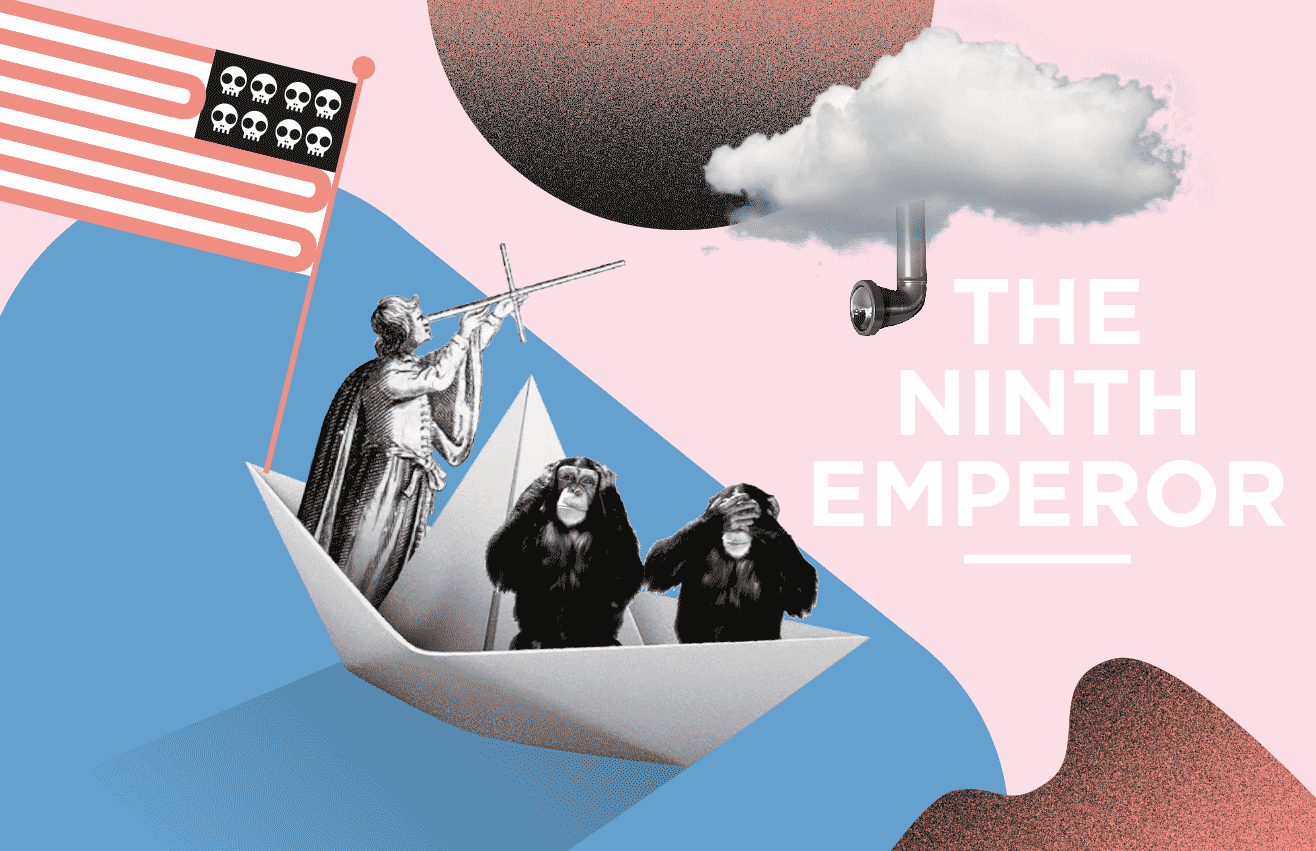
Plato, perhaps in memoriam to Socrates, casts him as his primary inquisitor in his magnum opus; ‘The Republic’, describing democracy in a parable called: ‘The Ship of States’, which likened the governance of democracy to a seafaring vessel on an ocean journey, a metaphor I recall C.S. Lewis borrowed in his own work ‘Mere Christianity’.
The parable describes three archetypes on board this hyperbolic ship.
The first was the Captain, master of the ship, who was not only, according to Plato, short-sighted, deaf and stupid, but also ignorant. Second were the crew who easily manipulated and seduced the Captain by way of flattery, until he would agree to whatever they ultimately desired – fuel for their ‘carousel of pleasures’. Third was the Navigator, who possessed the most knowledge about the direction and destination of the vessel, who had a sense of seamanship, knowledge of the stars, experience in commanding scientific principles, but who was generally viewed with contempt by both the crew and Captain. Without the participation of the Navigator, and if he wasn’t taken seriously, the voyage was doomed to shipwreck.
Captain, crew and navigator.
Rather alarmingly, after almost three thousand years this is is still an accurate metaphor for today’s governance, our present state of play, where we have most leaders easily seduced by popularity, a population mostly still voting according to their pleasures, while a superb Navigator in Jesus Christ, hulled in a vessel that He built, is despised and ignored by 75% of the populace in most of the countries around the world, it is no wonder I find myself periodically exacerbated by this love hate relationship with democracy, which makes me more misanthropic than I really want to be.
Why should we not trust the crew?
Because enough has been written on our human nature, how it is fickle, gullible, protean and even in some instances, foolish. Alexander Hamilton and his two co-authors of the Federalist Papers that ratified the American constitution understood, like Plato, that the right form of government cannot rid the defects of human nature, but can control people long enough for them to engage in the life long mission of self-correction in the hope of creating and developing a responsible citizen, for none exits the womb ripe for self governance, which is why we need a Navigator.
Why should we trust the Navigator?
Because He ultimately is the only one who knows where He and we are going, after suffering the most brutal of shipwrecks, He beat death and arrived the other side of eternity, where He healed and then came back to tell you and I all about the place He has prepared for each of us, and that it was alright, that He knew the way through.
John Lee who published a novel in 1976 inspired by actual World War II events called ‘The Ninth Man’. The story follows eight German saboteurs who landed in the United States by submarine, and although all eight were captured within a week, there remained an undiscovered ninth agent. We are called, urged, admonished to find, pay attention and take seriously the undiscovered ninth agent.
After the eight kingdoms that persecuted Israel, and the eight archetypes embodied in the last eight American Presidents, we vote for the Navigator, putting our hopes in Him and hail Jesus Christ as the ninth Emperor of the ninth Empire – the Kingdom of Heaven.

 thankyoubackbone.com